
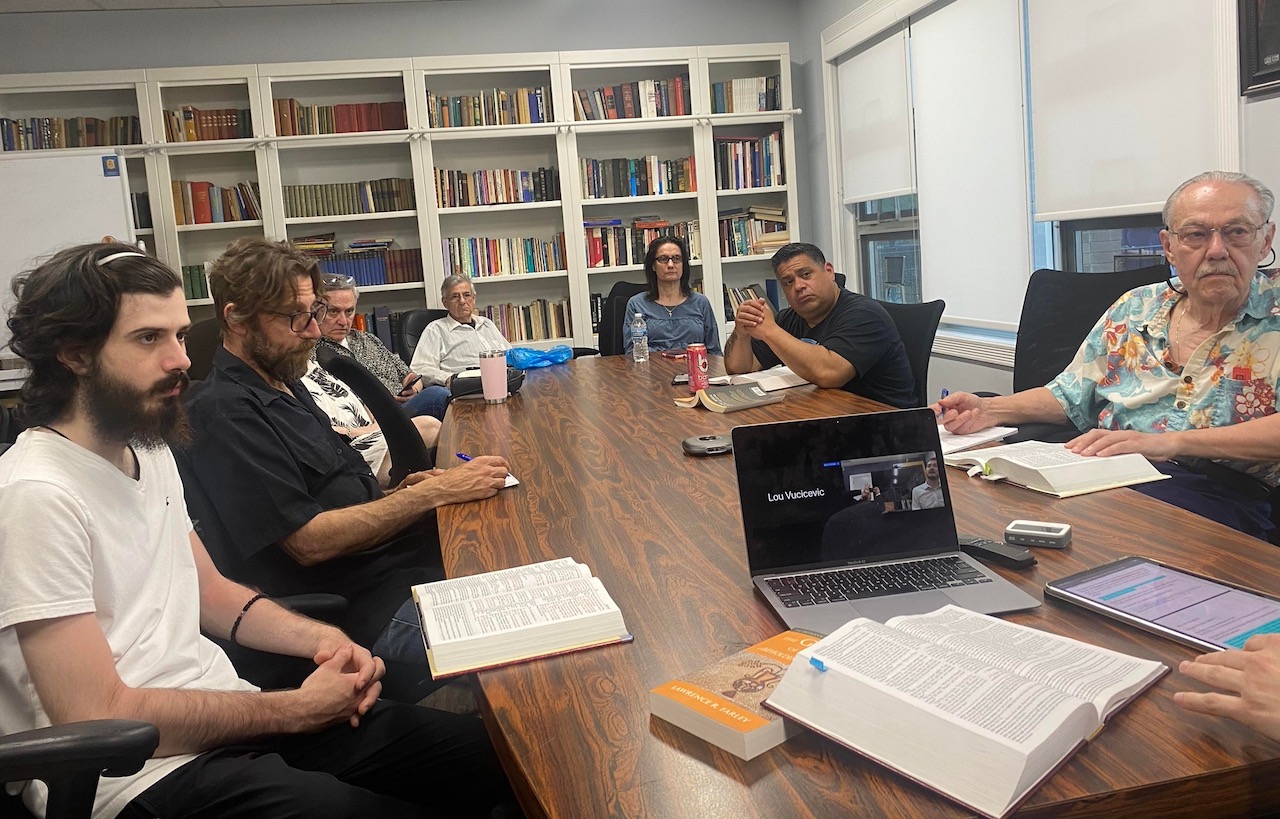
Theological Implications of John 8
Holy Resurrection Serbian Orthodox Cathedral, Chicago, IL

Date:
May 13, 2022
Adult Religious Education
Chapter 8 of the Gospel of John offers deep theology in the form of the dialogue between Christ and Jews. This is a dialogue of the total opposites. Jesus is from above, they are from below; they are from this world, he is not from this world; where he goes, they cannot come; God is his Father, while their father is the devil. When the theological argument of the Pharisees fails, they turn to the verbal and physical abuse of Christ, calling him Samaritan and devil, and finally stoning him.
St. Justin of Celije describes this encounter as Christ-fighters taking on their Creator, while enslaved by the sin. He writes: “With their souls, Christ-fighters are born of the devil. It is a proven gospel realism. And this separates the godly human soul from God, from the truth of God, deprives it of the sonship of God, and thus of God-feeling and knowledge of God. And the man feels as if he has nothing to do with God, that he is not from God even after creation; he feels as if he doesn’t need God, and finally – as if there is no God.”
Several important theological themes flower from this chapter. The obedience of Christ to God the Father is humbling and prominent. The theme of the adoption permeates the lives of the contemporary readers and contrasts them with sinners who are slaves of the sin who leads into unexpected states of uncertainty. Finally, Christ offers true freedom, the freedom from the death on his “lifting” on the Cross.
Photo credits: Fr. Nikolaj Kostur and Ljubica Šojić Gročić









 neuroBIBLISTICS