
A Biblical Understanding of Priestly Vestments in the Orthodox Church
St. Basil of Ostrog Serbian Orthodox Church, Lake Forest, IL
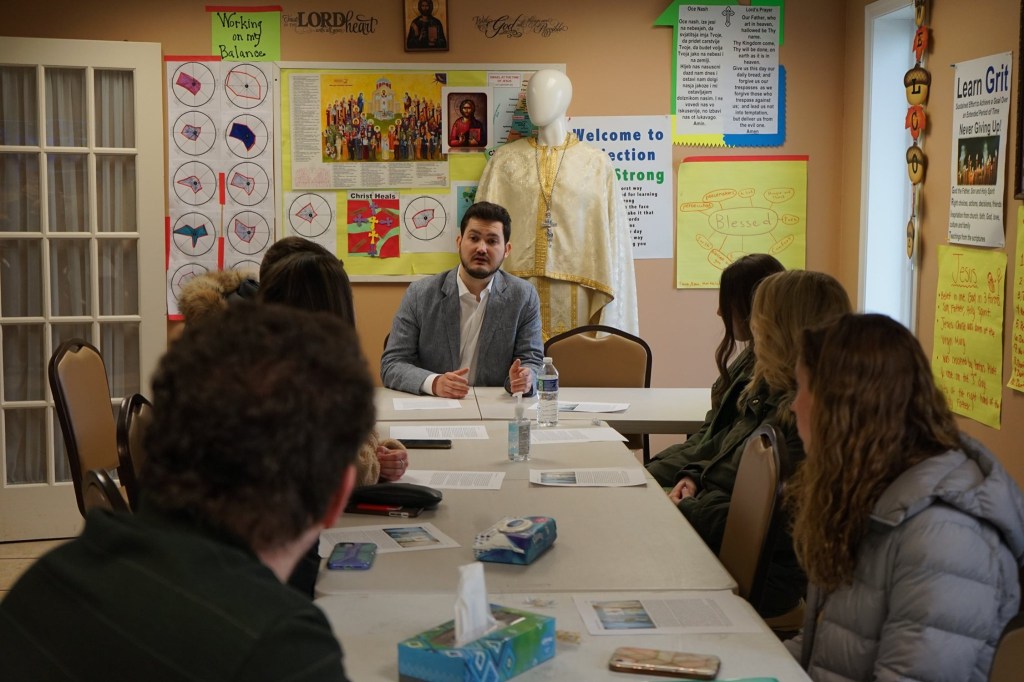
Date:
March 15, 2020
Church School Lecture
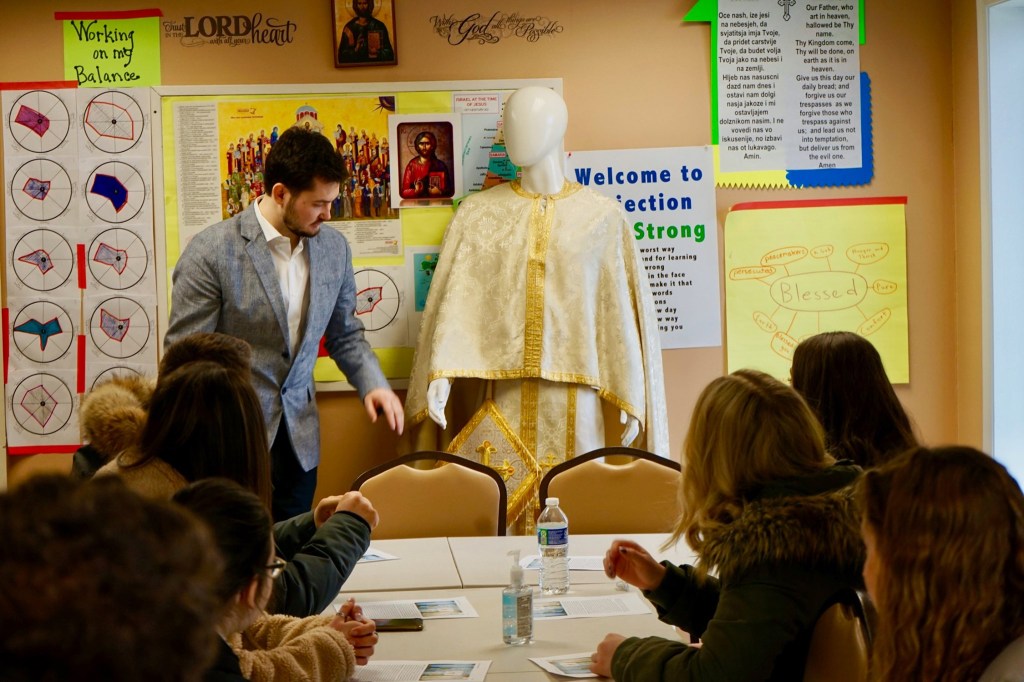
Vestments in the Orthodox Christian Church have biblical foundations. It seems that the Priest is clothed in Psalms and Prophecies, with the very Word of God before serving Divine Liturgy:
1. Sticharion: Isaiah 61:10 speaks about a special garment that represents a special service: “I will greatly rejoice in the Lord; my soul shall exult in my God, for he has clothed me with the garments of salvation; he has covered me with the robe of righteousness, as a bridegroom decks himself like a priest with a beautiful headdress, and as a bride adorns herself with her jewels.” This is reminiscent of the baptism but also has the wedding allusions: this special robe represents a relationship.
2. The Epitrachelion: Psalm 133:2 says: “It is like the precious oil on the head, running down on the beard, on the beard of Aaron, running down on the collar of his robes!” The priest is arming himself like the high priest Aaron did in the Old Testament.
3. The Belt: The belt around the waist is put on next. The priest “equips himself” according to the vesting prayer which comes from Psalm 18:32 “The God who equipped me with strength and made my way blameless”.
4. The Cuffs: Cuffs represent God’s strength and greatness. Ps 119 reads: “Your hands have made and fashioned me; give me understanding that I may learn your commandments.” Priest’s hands are prepared for doing great things.
5. The Spiritual Sword: This garment represents God’s awesome and mighty deeds. Ps 45:3–4 says: “Gird your sword on your thigh, O mighty one, in your splendor and majesty! In your majesty ride out victoriously for the cause of truth and meekness and righteousness; let your right hand teach you awesome deeds!” The Priest who is wearing this is reminded that God’s word is sharp and piercing but also full of life and able to create.
6. The Phelonion: “Let your priests be clothed with righteousness, and let your saints shout for joy”, are the words of Ps 132:9. These words are represented in the phelonion which is made as a long, beautiful garment that protects the priest as righteousness. Joy is represented by the beautiful material the phelonion is made of.
7. Pectoral Cross: The Gospel of Matthew reminds us of Christ’s words to his disciples: “If anyone would come after me, let him deny himself and take up his cross and follow me. For whoever would save his life[a] will lose it, but whoever loses his life for my sake will find it” (Matthew 16:24-26). The cross is a symbol of the sacrifice of Christ but also a symbol of constant sacrificial Christian attitude for Salvation of self and others.


 neuroBIBLISTICS